Centralized supervision of CCTV infrastructure, video analytics, and electrical consumption in multi-site industrial operations
How a manufacturing industrial operation with three production plants went from scattered manual inspections to unified, proactive management of over 268 video surveillance and energy metering assets, without additional on-site hardware.
An industrial operation with three geographically dispersed production plants needed to supervise over 200 cameras, 24 recorders, 34 electrical meters, and a gate video analytics system. Reveal unified the supervision of all this infrastructure into a single platform, enabled automatic alerts for faults and deviations, and integrated intelligent event detection at access points, all without the need to install additional physical hardware at the sites.
An industrial operation with three geographically distributed production plants relied on manual inspections and on-site reviews to supervise the status of its video surveillance infrastructure, detect recording equipment faults, and control electrical consumption by zone. The geographic dispersion and asset scale made this supervision slow, incomplete, and reactive.
This dynamic created several concrete operational frictions:
With over 200 cameras and 24 DVR recorders distributed across 3 sites, there was no platform that would allow knowing the status of communication channels, hard drives, and video devices in a unified way. Supervision required traveling to each location.
Hard drive failures in DVRs or camera disconnections were only detected through manual inspection, creating time windows without recording and security risks that went unnoticed until the next on-site review.
The gate video analytics system operated in isolation, without integration with the central monitoring platform, limiting the operational utility of intelligent event detection at access points.
The main plant had 34 electrical meters without any data consolidation system, preventing consumption analysis by metering point or identification of pattern deviations.
intermittent or permanent channel disconnection between the DVR and the network indicates a connectivity problem that can leave an entire plant zone without recording.
when a camera stops reporting, a security coverage blind spot is created that is only discovered if someone manually reviews the corresponding DVR.
hard drives presenting write errors or that stop recording anticipate video evidence loss that can have legal or operational impact.
if a camera configured for motion detection stops registering events, it may indicate a sensor failure, visual field obstruction, or misconfiguration.
person or vehicle detection at gates that is not integrated with the central system prevents information cross-referencing and loses operational value.
spikes, drops, or atypical patterns in a specific zone's meters can signal defective equipment, current leaks, or inefficient energy use.
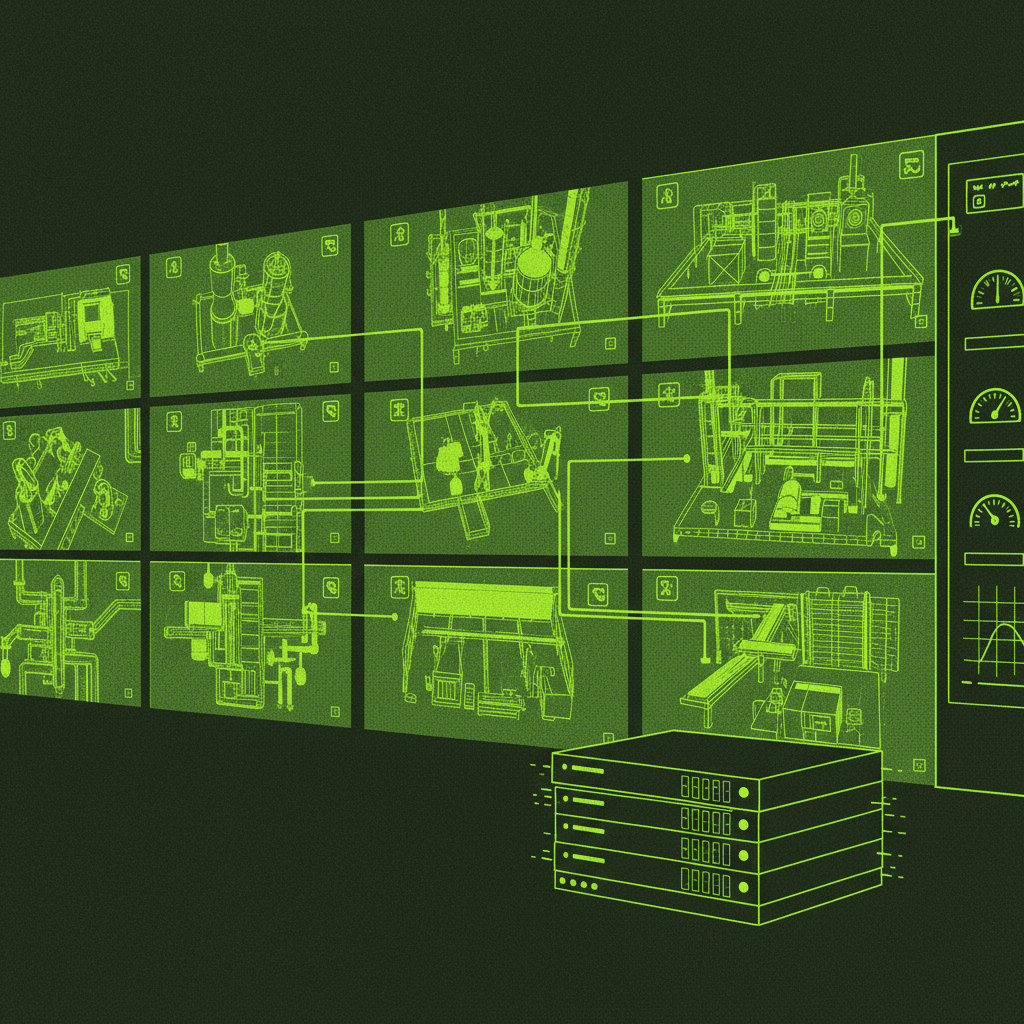
Reveal centralizes information from all connected assets across the three sites through a virtual gateway, monitors the status of each component continuously, detects relevant events, and records historical traceability to identify conditions requiring intervention.
In this case, the platform:
Supervises the communication status of each DVR recorder and each camera across the 3 sites, detecting disconnections or channel interruptions automatically.
Monitors the operational status of DVR hard drives, identifying failure conditions that can compromise video recording.
Integrates the gate video analytics system — person and vehicle detection — into the same platform, consolidating access events with the rest of the security infrastructure.
Receives and consolidates electrical variables from 34 meters (3 main and 31 secondary) at the main plant, providing granular visibility of consumption by zone and metering point.
Generates automatic alerts when it detects faults, disconnections, or deviations exceeding configured thresholds, channeling operator attention toward exceptions.
Operates through a cloud-hosted virtual gateway, without requiring additional physical hardware at each site.
- ▸Reveal's value is not in showing the status of 268 assets on a dashboard. It is in enabling concrete operational decisions for the security, maintenance, and energy management teams. With this implementation, the team can:
- ▸Prioritize attention on DVRs or cameras with active faults, instead of manually reviewing all equipment across the 3 sites.
- ▸Escalate to immediate maintenance when a DVR hard drive shows degradation, before the complete recording capacity of a zone is lost.
- ▸Verify in real time whether an event detected by gate video analytics corresponds to a situation requiring security intervention.
- ▸Identify which zones of the main plant have out-of-pattern electrical consumption, to direct specific energy audits instead of general inspections.
- ▸Coordinate incident response across the 3 sites from a centralized point, without depending on personnel at each location to report equipment status.
- ▸Reduce manual CCTV infrastructure review rounds by concentrating exclusively on assets with active exceptions.
Operational result
on-site review rounds of DVRs, cameras, and hard drives are replaced by centralized, exception-based supervision, freeing up technical team time.
the security and operations team has continuous access to the status of over 268 assets across 3 sites, without needing to travel to each plant.
automatic alerts for disconnections, disk failures, or electrical deviations allow intervention before the problem escalates to recording loss or security risk.
gate video analytics, which previously operated independently, is now part of the same supervision ecosystem, enriching available information for security decisions.
supervision of 3 geographically dispersed plants is consolidated into a single platform, eliminating operational fragmentation.
Business result
early detection of video coverage blind spots reduces the probability of unrecorded incidents.
proactive identification of hard drive and communication channel failures minimizes time windows without video evidence.
the virtual gateway architecture allows expanding coverage to new sites or assets without installing additional physical equipment.
granular electrical consumption data by zone enables identification of inefficiencies and implementation of energy cost reduction strategies.