Comprehensive security monitoring and fire prevention in heavy machinery facilities
How an industrial machinery distribution operation went from fragmented video surveillance, alarm, and fire systems to centralized supervision with automatic alerting from a single platform.
A heavy machinery distribution operation whose facilities house high-value equipment and assets operated with completely independent video surveillance, alarm, and fire detection systems, without centralized supervision or automatic alerts. Reveal unified the monitoring of 26 video recorders (17 NVR and 9 DVR), the alarm panel, and the fire detection panel into a single platform, enabled automatic alerts for recording failures, security events, and fire risk conditions, and eliminated dependence on on-site inspections to verify security infrastructure status.
An industrial machinery distribution and service operation — with facilities housing high-value equipment, spare parts, and assets — relied on periodic manual inspections to verify the status of an extensive video surveillance network composed of 26 recorders, an alarm system, and a fire detection system. Information was fragmented across multiple non-integrated systems, delaying the detection of recording failures, preventing immediate response to security events, and leaving fire protection systems without remote visibility.
This dynamic created several concrete operational frictions:
The 17 NVR and 9 DVR recorders operated without a unified platform that would allow knowing in real time the status of video channels, hard drives, and availability of each recorder. A failure in any of them was only discovered during an on-site inspection or when it had already compromised recording coverage.
Hard drive failures, camera disconnections, or video channel interruptions were only detected through manual review of each recorder, creating time windows without recording coverage in areas housing high-value assets.
The alarm panel operated in isolation, without integration into a central platform for unified visibility and automatic alerts. An activation event or system failure was only known if someone was reviewing the panel at that moment.
The fire detection system lacked centralized monitoring or remote alerts, limiting response capability for risk events in facilities where machinery, fuels, and stored materials represent a significant fire load.
when a video channel stops transmitting or a camera disconnects, a security coverage blind spot is created that, in facilities with high-value assets, can facilitate losses or undocumented incidents.
a hard drive reporting errors, reduced capacity, or total failure compromises continuous recording. Without automatic detection, stored video loss is only discovered when an event needs to be reviewed that is no longer recorded.
an NVR or DVR that stops responding or shows intermittent disconnections indicates a power, network, or hardware problem that, without automatic alerting, can extend for hours or days without anyone detecting it.
an off-hours zone activation or one without known operational cause may indicate an intrusion, forced door, or security condition requiring immediate verification.
a disconnected sensor, a zone with communication problems, or a low battery in the alarm panel reduces detection capability without the security team knowing, creating a vulnerability window.
any fire panel activation — whether by automatic detection or operational anomaly — requires immediate response in facilities where heavy machinery, fuels, and materials present rapid fire spread risk.
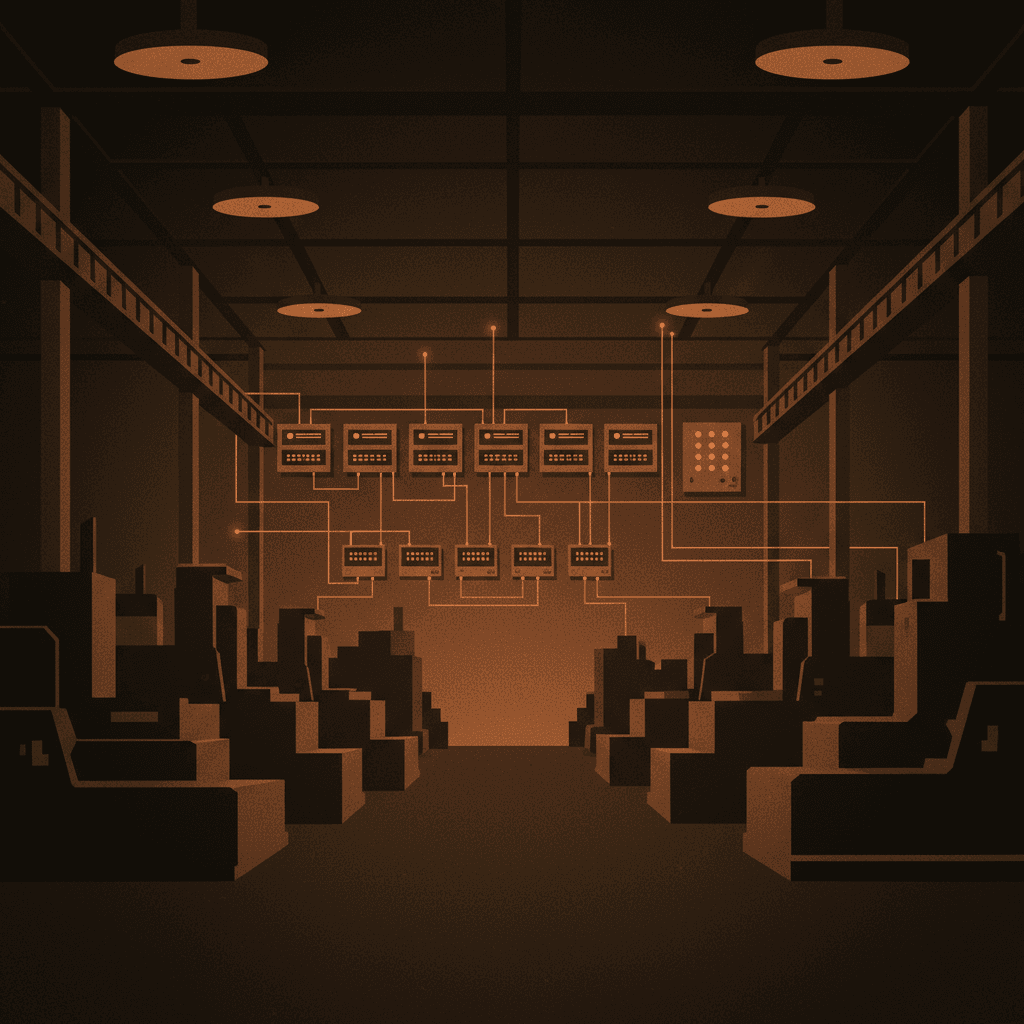
Reveal centralizes information from all the facility's security infrastructure — video surveillance, alarm, and fire detection — monitors critical variables continuously, detects relevant events, and records historical traceability to identify conditions requiring intervention.
In this case, the platform:
Supervises the status of each of the 17 NVR recorders, including active IP video channels, hard drive status, and system availability, detecting disconnections or failures that compromise recording coverage.
Monitors the 9 DVR recorders with their analog camera channels and hard drives, ensuring continuous visibility of the analog video surveillance network status.
Integrates the alarm panel into the same platform, receiving zone activation events, sensor failures, and overall system status, with automatic alerts to the security team.
Receives fire detection panel status, including activations, operational failures, and anomalies, generating immediate alerts for any risk condition.
Generates automatic alerts when it detects any event requiring attention — channel loss, disk failure, alarm activation, or fire event — channeling the team's response toward exceptions.
Unifies communication from all 28 connected devices through a single gateway, simplifying connectivity architecture and reducing failure points in the monitoring infrastructure.
- ▸Reveal's value is not in showing the status of 26 recorders on a dashboard. It is in enabling security decisions that previously could only be made after an on-site inspection. With this implementation, the team can:
- ▸Escalate to immediate maintenance when a recorder reports a hard drive failure or channel loss, before the unrecorded window extends and compromises incident documentation.
- ▸Verify in real time whether the entire video surveillance network is operational, without needing to physically inspect each of the 26 recorders distributed across the facilities.
- ▸Activate the security response protocol when the alarm panel reports an off-hours zone activation, with certainty that the alert reaches the right team without depending on someone being in front of the panel.
- ▸Respond immediately to a fire detection system activation, coordinating evacuation or intervention before fire spreads in facilities with high fire load.
- ▸Identify and correct operational failures in the alarm panel or fire panel — disconnected sensors, open circuits, low batteries — before they reduce protection capability without anyone knowing.
- ▸Prioritize the security team's attention on devices and systems with active exceptions, freeing time from routine inspection rounds to focus on conditions that truly require intervention.
Operational result
the status of the 17 NVRs and 9 DVRs is visible in real time from a single platform, eliminating the need for on-site inspections to verify video surveillance network operability.
automatic alerts for camera disconnections, hard drive failures, or channel interruptions minimize periods without recording coverage in areas with high-value assets.
the alarm panel and fire detection panel are monitored centrally with automatic alerts, eliminating dependence on manual review of each panel separately.
all 28 devices communicate with the platform through a single connectivity point, reducing monitoring infrastructure complexity.
continuous recording of failures, activations, and statuses of all systems provides documented history for incident analysis and maintenance planning.
Business result
continuous supervision of all security infrastructure ensures permanent protection of equipment, machinery, and spare parts representing significant assets.
immediate detection of recording failures reduces the probability that a security incident occurs during a window without video coverage, ensuring events are always recorded.
automatic alerts for alarm and fire events enable emergency protocol activation without the delay inherent to a periodic on-site inspection model.
personnel focus on real conditions requiring attention, instead of distributing effort across manual verification rounds of 26 recorders, an alarm panel, and a fire panel.